
Mechanical pressure gauges are instruments used in a variety of industrial and commercial applications to measure the pressure of gases or liquids. They are critical instruments that ensure the safe and efficient operation of numerous processes and machinery across a wide range of industries. One can commonly be found used in the oil and gas, chemical, pharmaceutical, food and beverage, automotive, and manufacturing industries.
The value of pressure gauges stems from their capacity to detect pressure changes in real time, putting the user in command of timely responses and interventions to prevent system failure, leaks, and other potential hazards. The primary function of pressure gauges is to monitor and manage the pressure of various substances in tanks, pipelines, and other systems, ensuring that they function properly.
With numerous pressure gauges available in the market, It becomes very crucial to choose the right pressure gauge. selecting the wrong one can result in inaccurate readings, system failure, or safety hazards.
The pressure gauge's design, material, and accuracy are the most basic and important aspects of pressure gauges, which must be carefully selected to ensure it is suitable for the intended purpose. Additionally, it is also critical to consider factors such as pressure range, operating temperature, environment, and medium compatibility.
When selecting a suitable pressure gauge, the following factors should always be considered. You will be able to select the Pressure Gauge based on these factors.
- Determine the appropriate pressure range for your application.
- Consider the many pressure gauges on the market, including Bourdon Tube Gauges, Diaphragm Gauges, Differential Pressure Gauges, and Digital Gauges.
- Determine the level of accuracy and resolution required for your application.
- Consider the environmental conditions in which the gauge will operate.
- Ensure that the gauge is compatible with your system's mounting technique and size criteria.
- Consider the safety regulations and norms that apply to your industry.
The following steps one must consider before choosing the Pressure Gauges:
Pressure Range:
The initial and primary consideration is the pressure range needed for your application. Determine the maximum and lowest pressure levels that will be applied to the gauge. It is critical to choose a gauge that can properly measure the expected pressure range while also offering enough overload safety. To avoid false readings or instrument damage, make sure the pressure gauge's range is appropriate for the specific system or operation.
According to ASME B40.100, normal operating pressure should be kept between 25% and 75% of the scale. If the process contains pulsation, the maximum operating gauge pressure should not exceed 50% of the full-scale range.
Also read: 5 Detailed Applications for Pressure Sensors in Industry
Gauge Type:
There are various types of pressure gauges available, each designed for specific applications. Some common types include:
- Bourdon Tube Gauges: These gauges use a curved tube that expands and contracts in response to variations in pressure. They are appropriate for general-purpose applications and provide high accuracy and dependability.
- Diaphragm Gauges: Diaphragm gauges employ a flexible diaphragm that deflects when subjected to pressure. Because they are more resistant to damage and contamination, they are good for monitoring low pressures and corrosive fluids.
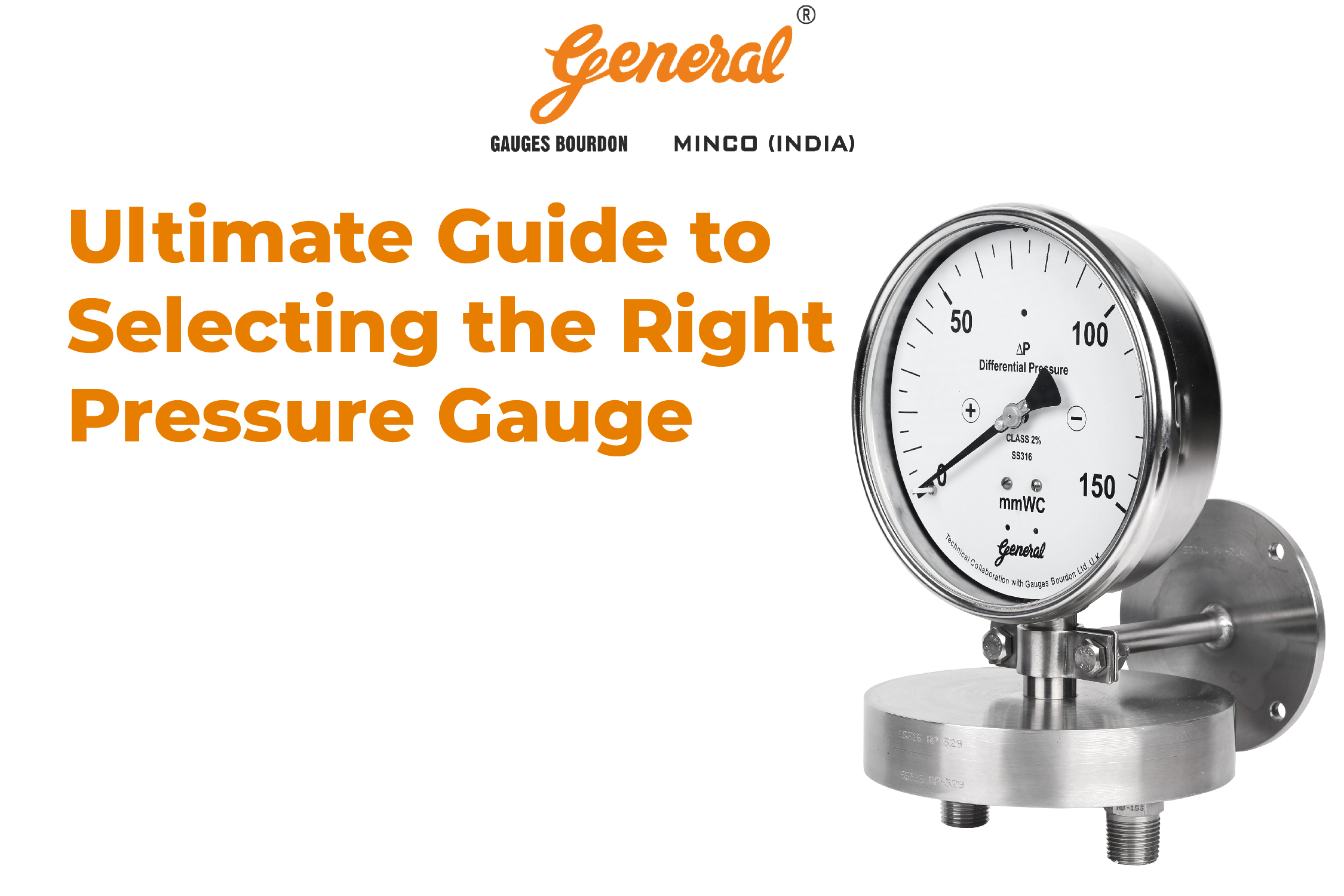
- Differential Pressure Gauges: These gauges determine the pressure differential between two places. They're frequently found in filtering systems, flow metering, and HVAC applications.
- Digital Gauges: Digital pressure gauges offer exact readings as well as sophisticated capabilities like data logging and wireless networking. They are suited for high-accuracy and data-integration applications.
Accuracy and Resolution:
Many industries rely on precise pressure measurements. Consider the precision and resolution required by your application when choosing a pressure gauge. Gauges having a smaller percentage error and better resolution may be required for high-precision applications.
The accuracy of a mechanical pressure gauge is expressed as a percentage of the full-scale range. While standards varied per industry, the following are typical guidelines:
- Accuracy of test gauges and standards: 0.25% to 0.10% whole scale.
- Critical Processes: full-scale accuracy of 0.5%.
- 1.0% accuracy in most industrial processes. Less Important Commercial Applications: 2.0% accuracy.
For further information on accuracy, see ASME B40.100.
Mounting and Size:
When choosing a pressure gauge, keep mounting requirements and space constraints in consideration. The gauge should be compatible with your system's mounting technique, which might be direct installation, panel mount, or remote mount. Furthermore, check that the gauge size is adequate for the given area without masking other components or posing a safety threat.
Gauges come with a range of connectors, including NPT, DIN, JIS, BSP, and SAE. Process pressure gauges with 4 1⁄2˝ " dial diameters or greater are often supplied with a 1⁄2˝ " NPT connector to effectively support the gauge. Process pressures, gauge size and weight, space constraints, leak integrity, and previous experience are all factors to consider when choosing a pressure gauge connection.
Environmental Conditions:
The pressure gauge's performance and durability are heavily influenced by the environment in which it will function. Temperature, humidity, vibration, and exposure to corrosive chemicals can all have an impact on gauge accuracy and longevity.
Check that the pressure gauge you choose is appropriate for the environmental conditions of your application. For hostile settings, specialised gauges with protected characteristics such as hermetically sealed cabinets or liquid-filled dials may be necessary.
The pressure gauge's wetted components, as well as the Bourdon tube and socket, must be compatible with the process medium. Corrosion will occur if the wetted elements of the gauge are not compatible.
Corrosion of gauge-wetted components will eventually lead to gauge failure and potentially dangerous situations. A diaphragm should be considered when the gauge-wetted elements are incompatible with the process media.
Safety Considerations & connection location:
Pressure gauges that correspond to current industry standards and regulations are essential in safety-sensitive applications. Look for gauges that are approved and, if applicable, suited for hazardous environments. Additional safety mechanisms, such as blowout discs or pressure relief valves, should be considered to safeguard the gauge and prevent catastrophic failures.
Consider the following mounting options when selecting a pressure gauge:
- Stem mount lower connect
- Wall/surface mount lower connect
- Panel mount back connect
- U-clamp flush mount back connect, for panel mounting
- Front flange flush mount back connect, for panel mounting
In conclusion, selecting the right pressure gauge is critical to ensuring accurate and reliable readings. Consider factors like the environment, wetted components compatibility, and certification needs. To assure quality and durability, choose a Certified Indian Pressure Gauge Manufacturer when choosing a pressure gauge. Taking the effort to select the appropriate pressure gauge for your application will result in improved performance and cost savings in the long term.

Recent Posts

The Importance of Accurate Temperature Control in...
Jul 08, 2024
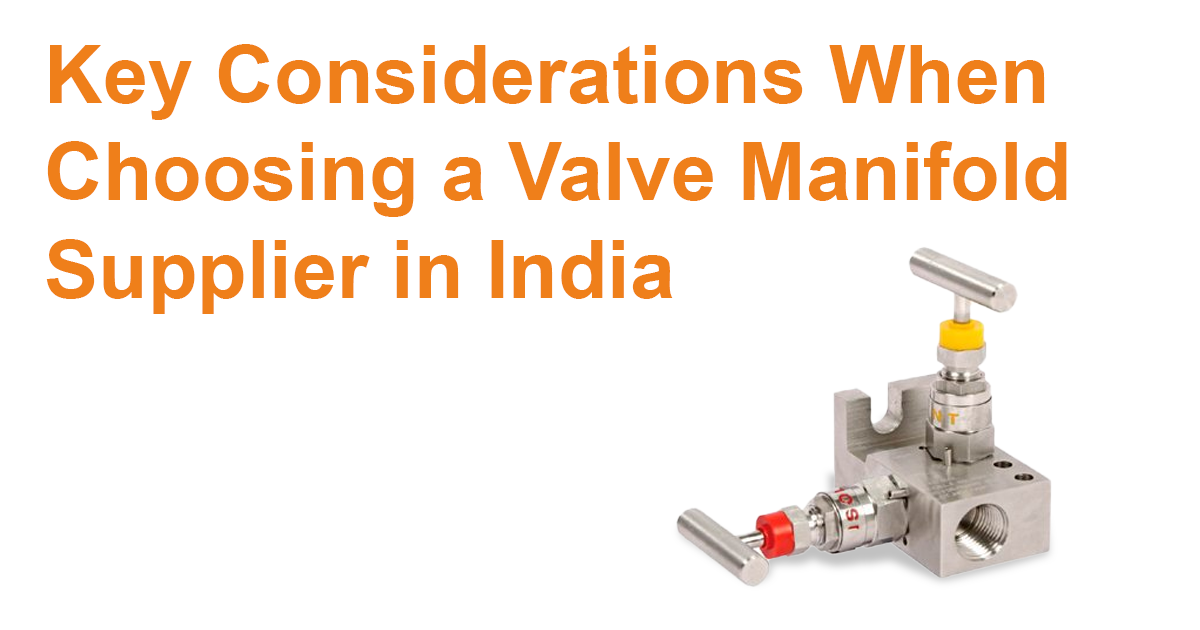
Key Considerations When Choosing a Valve Manifold...
May 27, 2024